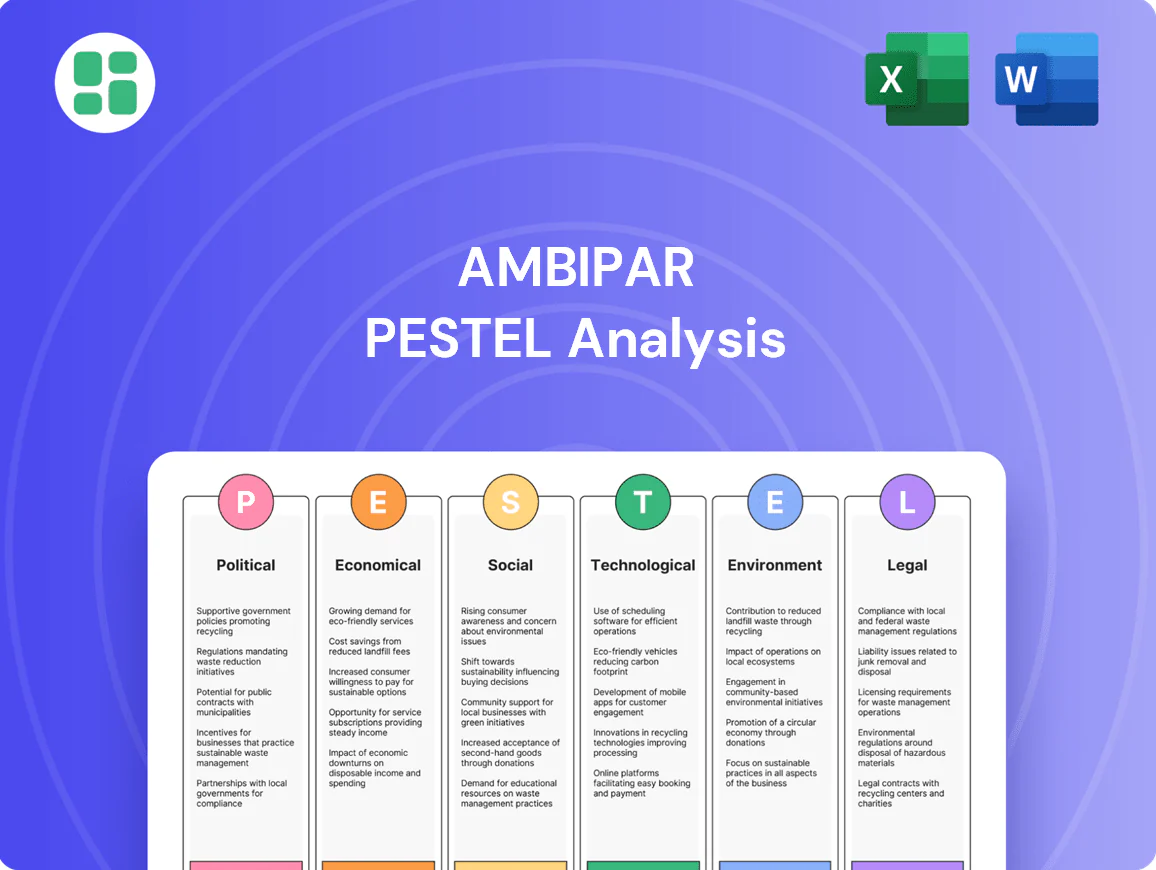
Telekom Austria PESTLE Analysis

Plan Smarter. Present Sharper. Compete Stronger.
Navigate the complex external forces shaping Telekom Austria's future with our comprehensive PESTLE analysis. Understand the political, economic, social, technological, legal, and environmental factors impacting its operations and strategic direction. Gain a significant competitive advantage by leveraging these expert-level insights. Download the full version now to unlock actionable intelligence and make more informed business decisions.
Political factors

Governmental Regulations and Deregulation
Governmental regulations significantly shape the operational landscape for A1 Telekom Austria. For instance, the deregulation of wholesale broadband markets in Austria, alongside new voluntary contracts for network access, directly influences the company's competitive positioning and its approach to infrastructure investment. These regulatory shifts are designed to stimulate greater competition and expedite the expansion of broadband and fiber networks throughout the country.
EU and National Digital Agendas
Austria's national digital agenda, strongly influenced by EU directives, emphasizes widespread high-speed internet access. The government aims for nationwide gigabit service by 2030, a significant push for digital connectivity.
This ambitious target necessitates substantial investment in fiber optic networks and the rollout of 5G technology. These infrastructure developments are crucial for meeting the digital demands of both citizens and businesses, impacting A1's strategic planning.
The Austrian government supports this digital transformation, often through regulatory frameworks and sometimes direct or indirect financial incentives, encouraging private sector participation in network expansion. A1, as a major player, is positioned to benefit from and contribute to these initiatives.

Political Stability and Geopolitical Risks
Political stability within Austria and the broader Central and Eastern European (CEE) region, where A1 Group actively operates, remains a foundational element for its business. Unforeseen political shifts can directly influence regulatory environments and investment climates, impacting A1's strategic planning and operational execution.
Geopolitical events, particularly those with ripple effects across Eastern Europe, present tangible risks. For instance, the situation in Belarus has previously led to significant operational hurdles for telecommunications providers, including currency depreciation and government-imposed service limitations that directly affect revenue streams and overall profitability for companies like A1 Group.

Spectrum Allocation and Licensing Policies
Government decisions on spectrum allocation and licensing directly shape A1 Telekom Austria's ability to offer advanced mobile services. These policies dictate the availability and cost of radio frequencies essential for 5G and future network expansions, impacting A1's competitive edge and investment strategies.
A1 has demonstrated its commitment to securing future capacity by actively participating in spectrum auctions. For instance, in 2024, the company secured significant spectrum holdings, including key frequencies for 5G deployment. This strategic acquisition is crucial for enhancing network capacity, improving service quality, and enabling new data-intensive applications for its customers.
- Spectrum Auctions: Government-led auctions are the primary mechanism for allocating mobile spectrum.
- 2024 Acquisitions: A1 secured substantial spectrum in 2024, bolstering its 5G capabilities.
- Impact on Services: Acquired spectrum directly translates to improved network performance and new service offerings.
Data Privacy and Cybersecurity Policies
Telekom Austria, operating as A1, faces a dynamic environment shaped by evolving data privacy and cybersecurity policies. The EU's NIS2 Directive, aiming to bolster cybersecurity across critical sectors, and the General Data Protection Regulation (GDPR) continue to impose stringent requirements on data handling and protection. These regulations demand substantial investments in robust IT infrastructure and comprehensive compliance frameworks, directly impacting operational costs and strategic planning for A1.
Navigating these increasingly rigorous policies presents both challenges and opportunities for A1. The need for enhanced security measures, including advanced threat detection and data encryption, requires significant capital expenditure. However, this also creates a fertile ground for A1 to leverage its expertise and expand its cybersecurity service offerings to other businesses, turning regulatory compliance into a potential revenue stream.
A1's proactive approach to cybersecurity is crucial, especially considering the growing sophistication of cyber threats. In 2024, the global cost of cybercrime was projected to reach \$10.5 trillion annually by 2025, highlighting the critical importance of strong defense mechanisms. A1's commitment to meeting and exceeding these regulatory standards is therefore not just a legal obligation but a strategic imperative for maintaining customer trust and operational resilience.
- NIS2 Directive: Enhances cybersecurity requirements for critical infrastructure operators, impacting network security and incident reporting.
- GDPR Compliance: Mandates strict rules on personal data processing, consent, and data breach notifications, affecting customer data management.
- Investment in Security: Significant capital allocation is needed for secure IT infrastructure, encryption, and ongoing compliance monitoring.
- Cybersecurity as a Service: Opportunity for A1 to offer specialized cybersecurity solutions to other enterprises, capitalizing on market demand.
Political Landscape: Digital Infrastructure and Geopolitical Risks
Government support for digital infrastructure is a key political factor, with Austria aiming for nationwide gigabit service by 2030, a goal that requires substantial investment in fiber and 5G. Political stability in Austria and the CEE region is crucial for A1's operations, as shifts can impact regulatory environments and investment climates. Geopolitical events, such as those affecting Eastern Europe, can introduce operational risks like currency depreciation and service limitations, as seen previously in Belarus.
What is included in the product
 Detailed Word Document
This PESTLE analysis provides a comprehensive examination of the external macro-environmental factors influencing Telekom Austria, covering Political, Economic, Social, Technological, Environmental, and Legal dimensions.
It offers forward-looking insights and actionable intelligence to support strategic decision-making, helping to identify both opportunities and threats within the dynamic telecommunications landscape.

 Customizable Excel Spreadsheet
A concise PESTLE analysis for Telekom Austria, highlighting key external factors, serves as a pain point reliever by offering a clear, actionable overview for strategic decision-making.
Economic factors

Economic Growth and Recession Trends
Austria's economic performance is a key driver for A1 Telekom Austria Group. While global economic forecasts for 2024 and 2025 indicate stable growth, Austria itself has experienced a recessionary period. This downturn directly impacts consumer disposable income and business investment, which in turn affects demand for telecommunication services and A1's domestic revenue streams.
Inflation and Interest Rate Fluctuations
Declining inflation rates in the US and Eurozone throughout 2024, alongside anticipated interest rate cuts by central banks like the ECB, are creating a more favorable economic climate. This easing of monetary policy directly benefits Telekom Austria by lowering the cost of capital for its extensive infrastructure investments, such as expanding fiber optic networks and upgrading 5G capabilities. For instance, a 0.25% rate cut by the ECB could translate to millions in savings on a multi-billion euro infrastructure project.
Despite the overall downward trend in inflation, it remains a factor that can influence Telekom Austria's operational expenses, from energy costs to equipment procurement. Furthermore, persistent inflation, even at lower levels, could impact consumer price sensitivity, potentially affecting demand for telecommunication services or leading to slower adoption of premium offerings if discretionary spending tightens.

Consumer Spending and Disposable Income
Consumer demand for telecommunication services, such as high-speed internet and 5G, is directly tied to how much money people have left after essential expenses, known as disposable income. Price sensitivity also plays a big role; if costs rise too quickly, people might cut back on these services.
Despite a period of high inflation, A1 Telekom Austria has managed to grow its mobile subscriber base. In the first quarter of 2024, A1 Group reported a 3.1% increase in total revenue compared to the same period in 2023, reaching €2.1 billion. This growth was partly driven by their focus on offering good value and appealing deals to customers.

Investment in Digital Infrastructure
Austria's telecommunications sector is seeing robust investment in digital infrastructure, particularly in fiber optic and 5G networks. This is fueled by both national digital agenda goals and increasing consumer and business demand for faster, more reliable connectivity.
The A1 Group, a key player, has outlined significant capital expenditure plans for 2025, underscoring the industry's capital-intensive nature. These investments are crucial for maintaining competitiveness and expanding service offerings.
- Fiber Optic Expansion: Continued rollout of high-speed fiber to households and businesses across Austria.
- 5G Network Deployment: Ongoing expansion of 5G coverage, enabling new applications and services.
- A1 Group's 2025 CAPEX: Substantial planned investments by A1 Group to support network upgrades and expansion.
Competition and Market Maturity
Austria's telecommunications sector is a well-established and highly competitive landscape. Major players, including Telekom Austria (operating under the A1 brand), Magenta Telekom, and 3 Austria, vie for market share, creating a challenging environment for growth and profitability.
The competitive intensity is further amplified by the presence of Mobile Virtual Network Operators (MVNOs) and the increasing popularity of Over-The-Top (OTT) streaming services, which often bypass traditional telecom offerings. This dynamic forces incumbent operators like A1 to focus on differentiation strategies.
A1's approach to this mature market centers on several key areas to maintain its competitive edge:
- Network Quality: Continuous investment in 5G and fiber optic infrastructure remains paramount to offer superior connectivity.
- Digital Innovation: Developing new digital services and enhancing existing platforms to meet evolving customer demands.
- Customer Service: Providing exceptional customer support and personalized experiences to foster loyalty in a price-sensitive market.
As of early 2024, Austria's mobile penetration rate stands at over 120%, indicating a saturated market where customer acquisition is costly and retention is critical. For instance, A1 reported a mobile customer base of approximately 5.3 million in Q1 2024, highlighting the scale of competition.
A1's Resilience Amidst Austrian Economic Shifts
Austria's economic performance significantly impacts A1 Telekom Austria. While global growth forecasts for 2024-2025 are stable, Austria experienced a recession, affecting disposable income and business investment. This downturn directly influences demand for telecom services and A1's domestic revenue.
Declining inflation and anticipated interest rate cuts by the ECB in 2024 are creating a more favorable economic climate. This easing of monetary policy lowers the cost of capital for A1's infrastructure investments, such as fiber optic and 5G network expansion. For example, a 0.25% ECB rate cut could save millions on large-scale projects.
Despite a saturated mobile market with over 120% penetration as of early 2024, A1 Group saw a 3.1% revenue increase to €2.1 billion in Q1 2024, partly due to competitive offers. The company plans substantial capital expenditures for 2025 to maintain its edge in this capital-intensive industry.
| Metric | Value | Period | Source |
|---|---|---|---|
| A1 Group Total Revenue | €2.1 billion | Q1 2024 | A1 Group Financial Report |
| Mobile Subscriber Growth | 3.1% | Q1 2024 vs Q1 2023 | A1 Group Financial Report |
| Mobile Penetration Rate (Austria) | >120% | Early 2024 | Industry Analysis |
| A1 Mobile Customers | ~5.3 million | Q1 2024 | A1 Group Financial Report |
Full Version Awaits
Telekom Austria PESTLE Analysis
The preview shown here is the exact document you’ll receive after purchase—fully formatted and ready to use. This comprehensive Telekom Austria PESTLE analysis delves into the Political, Economic, Social, Technological, Legal, and Environmental factors impacting the company. Gain actionable insights to inform your strategic decisions.

Original: $10.00
-70%$10.00
$3.00Product Information
Product Information
Shipping & Returns
Shipping & Returns
Description
Plan Smarter. Present Sharper. Compete Stronger.
Navigate the complex external forces shaping Telekom Austria's future with our comprehensive PESTLE analysis. Understand the political, economic, social, technological, legal, and environmental factors impacting its operations and strategic direction. Gain a significant competitive advantage by leveraging these expert-level insights. Download the full version now to unlock actionable intelligence and make more informed business decisions.
Political factors
Governmental Regulations and Deregulation
Governmental regulations significantly shape the operational landscape for A1 Telekom Austria. For instance, the deregulation of wholesale broadband markets in Austria, alongside new voluntary contracts for network access, directly influences the company's competitive positioning and its approach to infrastructure investment. These regulatory shifts are designed to stimulate greater competition and expedite the expansion of broadband and fiber networks throughout the country.
EU and National Digital Agendas
Austria's national digital agenda, strongly influenced by EU directives, emphasizes widespread high-speed internet access. The government aims for nationwide gigabit service by 2030, a significant push for digital connectivity.
This ambitious target necessitates substantial investment in fiber optic networks and the rollout of 5G technology. These infrastructure developments are crucial for meeting the digital demands of both citizens and businesses, impacting A1's strategic planning.
The Austrian government supports this digital transformation, often through regulatory frameworks and sometimes direct or indirect financial incentives, encouraging private sector participation in network expansion. A1, as a major player, is positioned to benefit from and contribute to these initiatives.
Political Stability and Geopolitical Risks
Political stability within Austria and the broader Central and Eastern European (CEE) region, where A1 Group actively operates, remains a foundational element for its business. Unforeseen political shifts can directly influence regulatory environments and investment climates, impacting A1's strategic planning and operational execution.
Geopolitical events, particularly those with ripple effects across Eastern Europe, present tangible risks. For instance, the situation in Belarus has previously led to significant operational hurdles for telecommunications providers, including currency depreciation and government-imposed service limitations that directly affect revenue streams and overall profitability for companies like A1 Group.
Spectrum Allocation and Licensing Policies
Government decisions on spectrum allocation and licensing directly shape A1 Telekom Austria's ability to offer advanced mobile services. These policies dictate the availability and cost of radio frequencies essential for 5G and future network expansions, impacting A1's competitive edge and investment strategies.
A1 has demonstrated its commitment to securing future capacity by actively participating in spectrum auctions. For instance, in 2024, the company secured significant spectrum holdings, including key frequencies for 5G deployment. This strategic acquisition is crucial for enhancing network capacity, improving service quality, and enabling new data-intensive applications for its customers.
- Spectrum Auctions: Government-led auctions are the primary mechanism for allocating mobile spectrum.
- 2024 Acquisitions: A1 secured substantial spectrum in 2024, bolstering its 5G capabilities.
- Impact on Services: Acquired spectrum directly translates to improved network performance and new service offerings.
Data Privacy and Cybersecurity Policies
Telekom Austria, operating as A1, faces a dynamic environment shaped by evolving data privacy and cybersecurity policies. The EU's NIS2 Directive, aiming to bolster cybersecurity across critical sectors, and the General Data Protection Regulation (GDPR) continue to impose stringent requirements on data handling and protection. These regulations demand substantial investments in robust IT infrastructure and comprehensive compliance frameworks, directly impacting operational costs and strategic planning for A1.
Navigating these increasingly rigorous policies presents both challenges and opportunities for A1. The need for enhanced security measures, including advanced threat detection and data encryption, requires significant capital expenditure. However, this also creates a fertile ground for A1 to leverage its expertise and expand its cybersecurity service offerings to other businesses, turning regulatory compliance into a potential revenue stream.
A1's proactive approach to cybersecurity is crucial, especially considering the growing sophistication of cyber threats. In 2024, the global cost of cybercrime was projected to reach \$10.5 trillion annually by 2025, highlighting the critical importance of strong defense mechanisms. A1's commitment to meeting and exceeding these regulatory standards is therefore not just a legal obligation but a strategic imperative for maintaining customer trust and operational resilience.
- NIS2 Directive: Enhances cybersecurity requirements for critical infrastructure operators, impacting network security and incident reporting.
- GDPR Compliance: Mandates strict rules on personal data processing, consent, and data breach notifications, affecting customer data management.
- Investment in Security: Significant capital allocation is needed for secure IT infrastructure, encryption, and ongoing compliance monitoring.
- Cybersecurity as a Service: Opportunity for A1 to offer specialized cybersecurity solutions to other enterprises, capitalizing on market demand.
Political Landscape: Digital Infrastructure and Geopolitical Risks
Government support for digital infrastructure is a key political factor, with Austria aiming for nationwide gigabit service by 2030, a goal that requires substantial investment in fiber and 5G. Political stability in Austria and the CEE region is crucial for A1's operations, as shifts can impact regulatory environments and investment climates. Geopolitical events, such as those affecting Eastern Europe, can introduce operational risks like currency depreciation and service limitations, as seen previously in Belarus.
What is included in the product
Detailed Word Document
This PESTLE analysis provides a comprehensive examination of the external macro-environmental factors influencing Telekom Austria, covering Political, Economic, Social, Technological, Environmental, and Legal dimensions.
It offers forward-looking insights and actionable intelligence to support strategic decision-making, helping to identify both opportunities and threats within the dynamic telecommunications landscape.
Customizable Excel Spreadsheet
A concise PESTLE analysis for Telekom Austria, highlighting key external factors, serves as a pain point reliever by offering a clear, actionable overview for strategic decision-making.
Economic factors
Economic Growth and Recession Trends
Austria's economic performance is a key driver for A1 Telekom Austria Group. While global economic forecasts for 2024 and 2025 indicate stable growth, Austria itself has experienced a recessionary period. This downturn directly impacts consumer disposable income and business investment, which in turn affects demand for telecommunication services and A1's domestic revenue streams.
Inflation and Interest Rate Fluctuations
Declining inflation rates in the US and Eurozone throughout 2024, alongside anticipated interest rate cuts by central banks like the ECB, are creating a more favorable economic climate. This easing of monetary policy directly benefits Telekom Austria by lowering the cost of capital for its extensive infrastructure investments, such as expanding fiber optic networks and upgrading 5G capabilities. For instance, a 0.25% rate cut by the ECB could translate to millions in savings on a multi-billion euro infrastructure project.
Despite the overall downward trend in inflation, it remains a factor that can influence Telekom Austria's operational expenses, from energy costs to equipment procurement. Furthermore, persistent inflation, even at lower levels, could impact consumer price sensitivity, potentially affecting demand for telecommunication services or leading to slower adoption of premium offerings if discretionary spending tightens.
Consumer Spending and Disposable Income
Consumer demand for telecommunication services, such as high-speed internet and 5G, is directly tied to how much money people have left after essential expenses, known as disposable income. Price sensitivity also plays a big role; if costs rise too quickly, people might cut back on these services.
Despite a period of high inflation, A1 Telekom Austria has managed to grow its mobile subscriber base. In the first quarter of 2024, A1 Group reported a 3.1% increase in total revenue compared to the same period in 2023, reaching €2.1 billion. This growth was partly driven by their focus on offering good value and appealing deals to customers.
Investment in Digital Infrastructure
Austria's telecommunications sector is seeing robust investment in digital infrastructure, particularly in fiber optic and 5G networks. This is fueled by both national digital agenda goals and increasing consumer and business demand for faster, more reliable connectivity.
The A1 Group, a key player, has outlined significant capital expenditure plans for 2025, underscoring the industry's capital-intensive nature. These investments are crucial for maintaining competitiveness and expanding service offerings.
- Fiber Optic Expansion: Continued rollout of high-speed fiber to households and businesses across Austria.
- 5G Network Deployment: Ongoing expansion of 5G coverage, enabling new applications and services.
- A1 Group's 2025 CAPEX: Substantial planned investments by A1 Group to support network upgrades and expansion.
Competition and Market Maturity
Austria's telecommunications sector is a well-established and highly competitive landscape. Major players, including Telekom Austria (operating under the A1 brand), Magenta Telekom, and 3 Austria, vie for market share, creating a challenging environment for growth and profitability.
The competitive intensity is further amplified by the presence of Mobile Virtual Network Operators (MVNOs) and the increasing popularity of Over-The-Top (OTT) streaming services, which often bypass traditional telecom offerings. This dynamic forces incumbent operators like A1 to focus on differentiation strategies.
A1's approach to this mature market centers on several key areas to maintain its competitive edge:
- Network Quality: Continuous investment in 5G and fiber optic infrastructure remains paramount to offer superior connectivity.
- Digital Innovation: Developing new digital services and enhancing existing platforms to meet evolving customer demands.
- Customer Service: Providing exceptional customer support and personalized experiences to foster loyalty in a price-sensitive market.
As of early 2024, Austria's mobile penetration rate stands at over 120%, indicating a saturated market where customer acquisition is costly and retention is critical. For instance, A1 reported a mobile customer base of approximately 5.3 million in Q1 2024, highlighting the scale of competition.
A1's Resilience Amidst Austrian Economic Shifts
Austria's economic performance significantly impacts A1 Telekom Austria. While global growth forecasts for 2024-2025 are stable, Austria experienced a recession, affecting disposable income and business investment. This downturn directly influences demand for telecom services and A1's domestic revenue.
Declining inflation and anticipated interest rate cuts by the ECB in 2024 are creating a more favorable economic climate. This easing of monetary policy lowers the cost of capital for A1's infrastructure investments, such as fiber optic and 5G network expansion. For example, a 0.25% ECB rate cut could save millions on large-scale projects.
Despite a saturated mobile market with over 120% penetration as of early 2024, A1 Group saw a 3.1% revenue increase to €2.1 billion in Q1 2024, partly due to competitive offers. The company plans substantial capital expenditures for 2025 to maintain its edge in this capital-intensive industry.
| Metric | Value | Period | Source |
|---|---|---|---|
| A1 Group Total Revenue | €2.1 billion | Q1 2024 | A1 Group Financial Report |
| Mobile Subscriber Growth | 3.1% | Q1 2024 vs Q1 2023 | A1 Group Financial Report |
| Mobile Penetration Rate (Austria) | >120% | Early 2024 | Industry Analysis |
| A1 Mobile Customers | ~5.3 million | Q1 2024 | A1 Group Financial Report |
Full Version Awaits
Telekom Austria PESTLE Analysis
The preview shown here is the exact document you’ll receive after purchase—fully formatted and ready to use. This comprehensive Telekom Austria PESTLE analysis delves into the Political, Economic, Social, Technological, Legal, and Environmental factors impacting the company. Gain actionable insights to inform your strategic decisions.